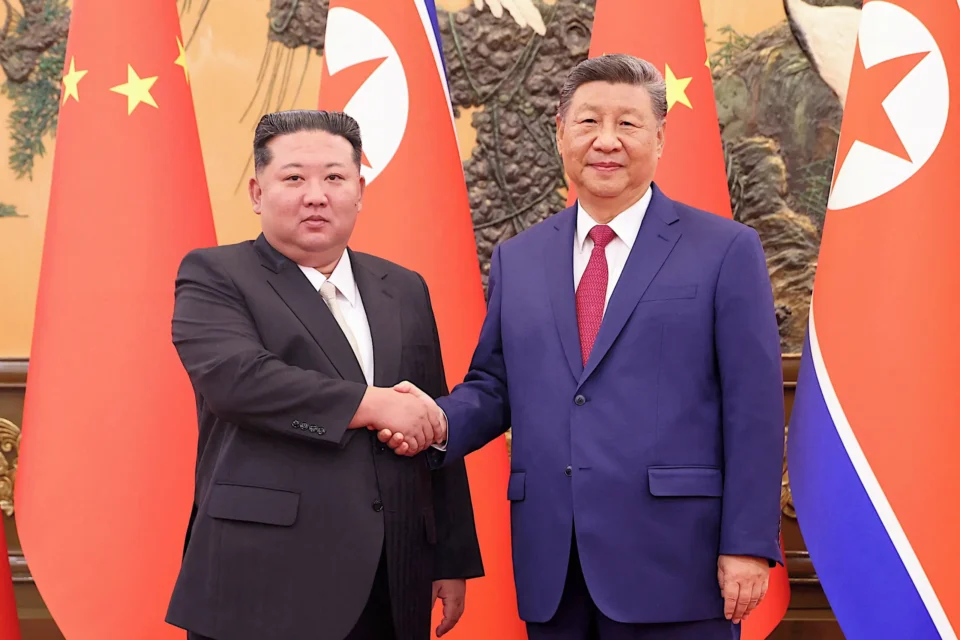
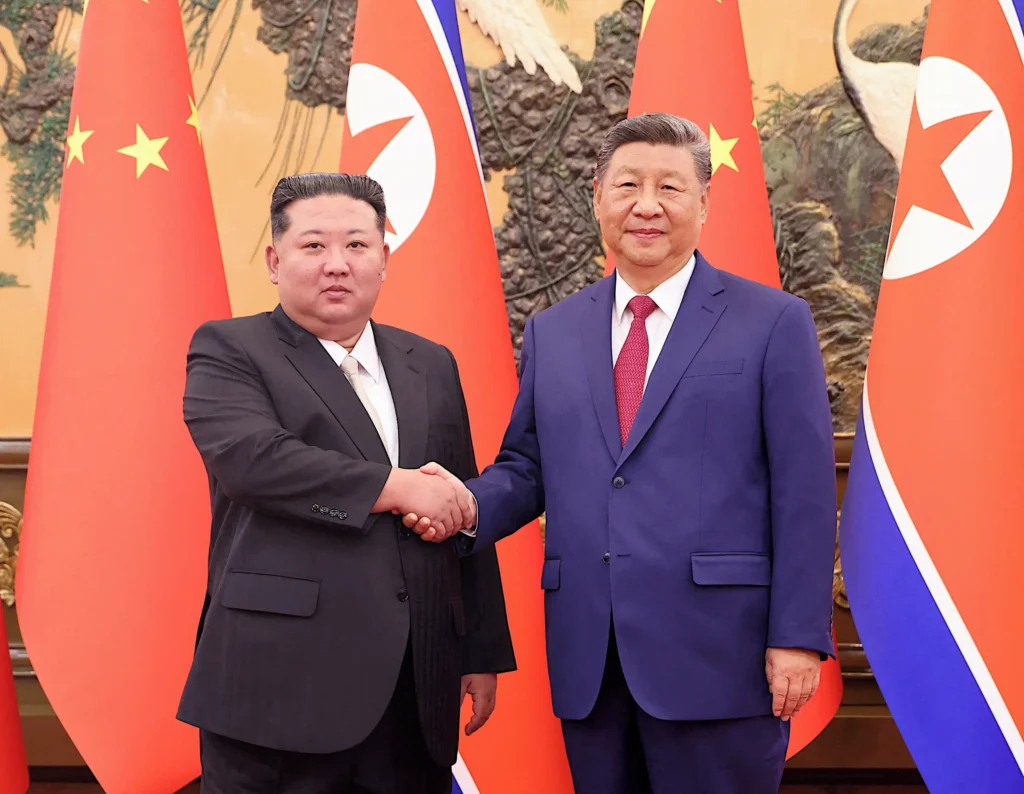
The arrival of Chinese President Xi Jinping in Pyongyang for a two-day summit with North Korean leader Kim Jong-un marks a significant shift in global geopolitics. While the official rhetoric from both communist regimes focuses on “developing mutual cooperation and fighting hegemony,” the reality beneath the red carpet at Kim Il-sung Square reveals a brand-new dynamic. Xi Jinping hasn’t visited Pyongyang in seven years, but in today’s global standoff, China is no longer the undisputed senior partner. The cards have shifted, and the North Korean dictator is the one playing them.
The Grand Spectacle of Authoritarian Unity
The welcoming ceremony in the North Korean capital left no doubt about the trajectory of both nations. Amid military bands, honorary gun salutes, and giant portraits of both leaders, Pyongyang sent a sharp signal to the Western world. China and North Korea are demonstrating absolute unity at a time when both face severe international backlash—Beijing for its aggressive stance toward autonomous Taiwan, and North Korea for its continuous military provocations and missile tests against its southern neighbors.
The Russian Card: Why Kim is Stronger Than Ever
During Xi’s last visit, North Korea was almost entirely dependent on Chinese economic aid and trade channels. Today, the situation is completely different. The relationship has transformed due to one major factor: Pyongyang’s booming military and economic ties with Moscow. Kim Jong-un successfully capitalized on Russia’s international isolation by becoming a critical ammunition and hardware supplier for the Kremlin. In return, he secured access to advanced Russian military tech and financial resources. This new axis, which also actively involves Iran, gives North Korea unprecedented leverage—even when negotiating with a superpower like China.
Challenging Western Dominance and Weakening Washington
Xi Jinping spoke heavily upon his arrival about promoting “fair multilateralism and inclusive economic globalization.” However, international analysts view these statements as mere diplomatic cover. The true objective of this alliance is the systematic erosion of American influence and the destabilization of Washington’s strategic partnerships in the Indo-Pacific region. As John Delury, an expert from the Asia Society, points out, this visit is about keeping traditions alive, but under very different and far more complicated conditions for China than in the past.
4 Key Factors Behind the New Asian Balance of Power
- North Korea’s Economic Diversification: Massive ammunition exports to Russia mean North Korea is no longer 100% reliant on the Chinese market and energy grids to survive.
- Technological Acceleration: Cooperation with Moscow on satellite and ballistic technologies has elevated Pyongyang’s military potential to a level that Beijing can no longer ignore.
- The Taiwan Parallel: China is closely watching Western reactions to conflicts worldwide; keeping a volatile, heavily armed ally like the DPRK on its eastern flank serves as a convenient strategic shield.
- The Rise of the Anti-Western Block: The alignment of China, Russia, North Korea, and Iran creates a powerful global entity that openly challenges the US-led international order and NATO.
Conclusion: Xi Jinping’s visit to North Korea proves that the traditional diplomatic chessboard has been flipped. Kim Jong-un is no longer just a junior protege protected by Beijing—he is an independent strategic player capable of masterfully maneuvering between Moscow and China. For the stability of the region and the Western alliance, this reality carries a stark warning: the threat from the East is more coordinated, technologically capable, and confident than ever before.
What is your take on this new geopolitical alliance? Will China and Russia successfully tip the global scales of power in their favor, or does North Korea represent too dangerous and volatile a partner for Beijing in the long run? Join the analysis in the comments below!